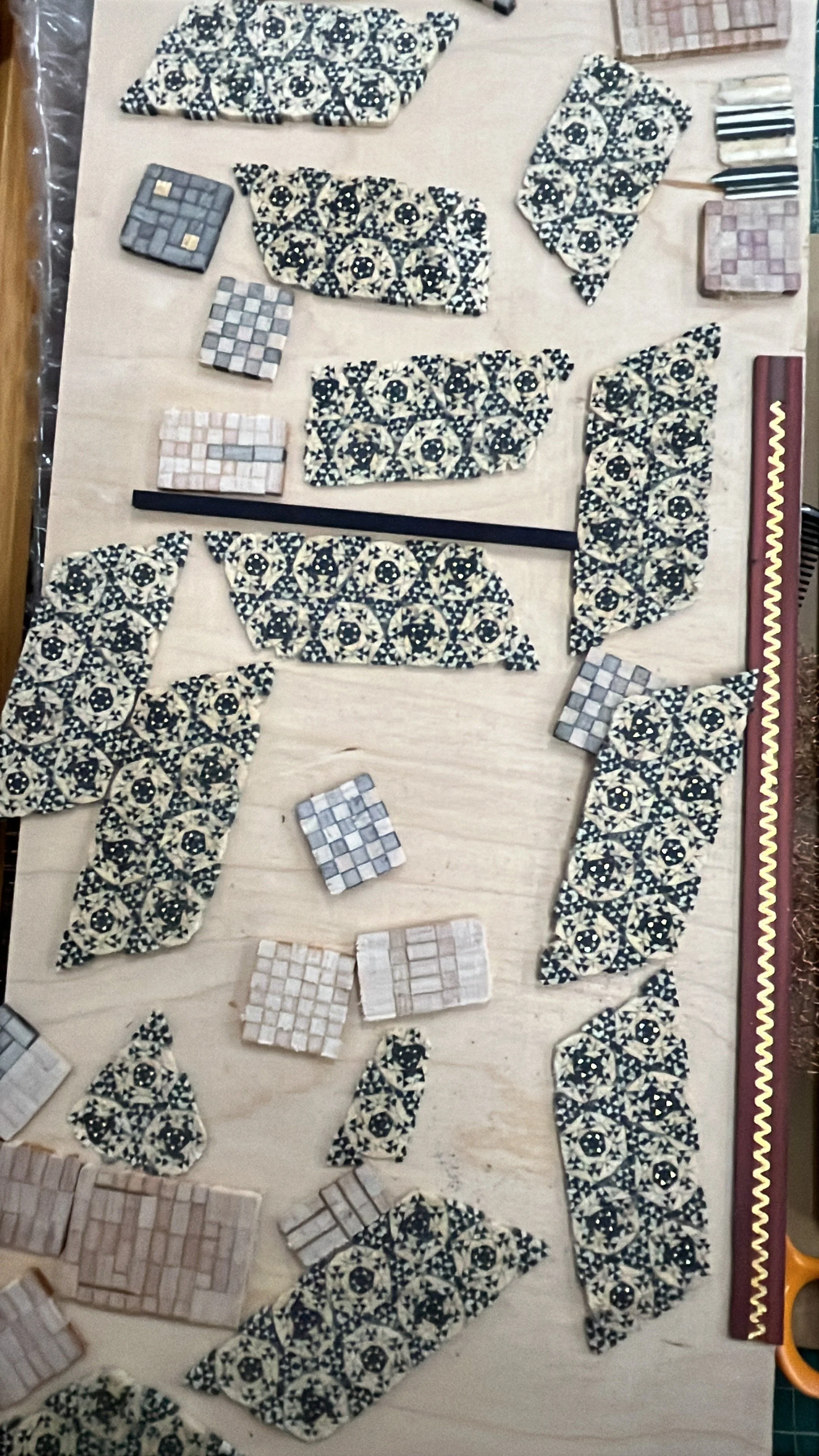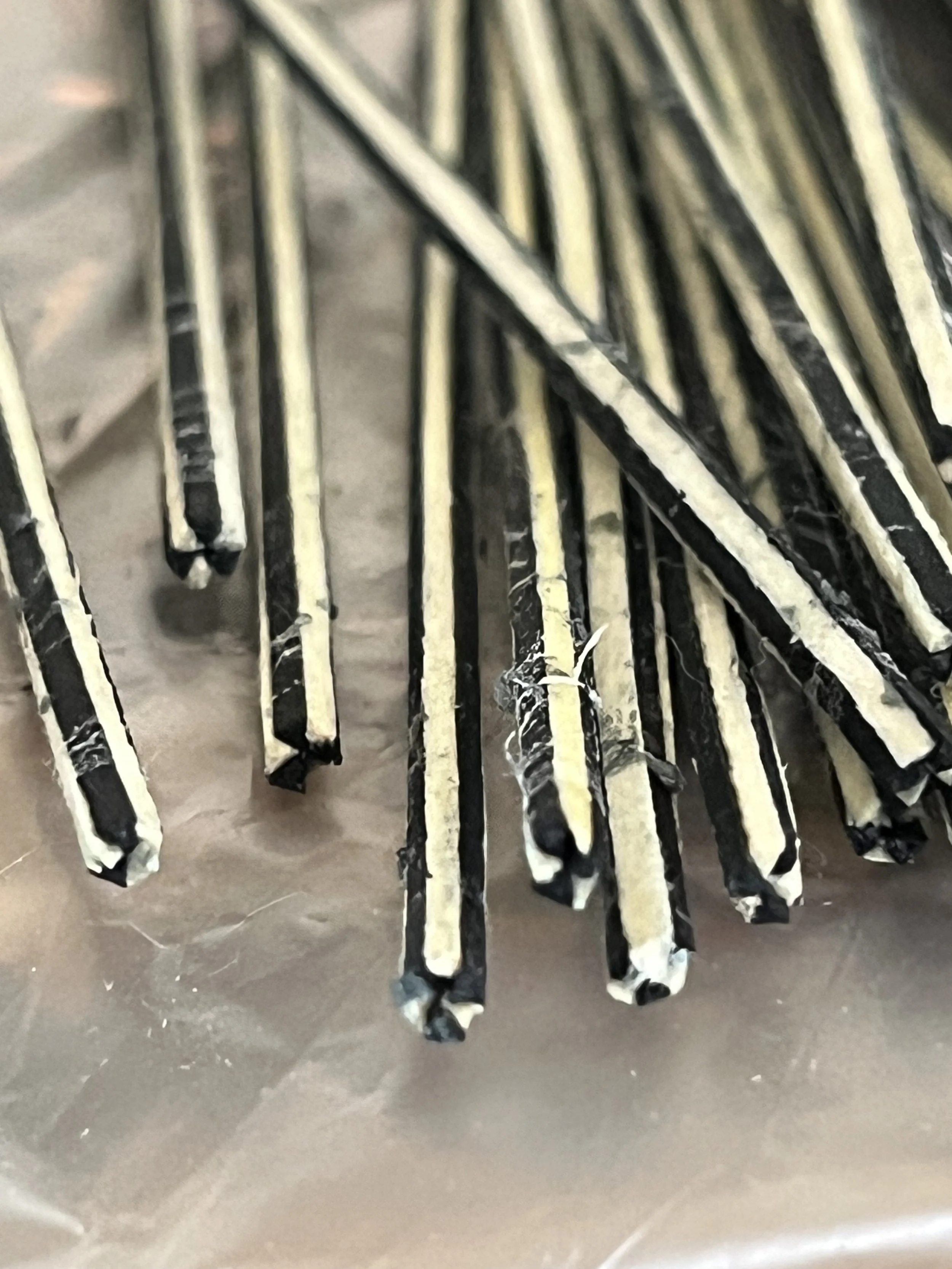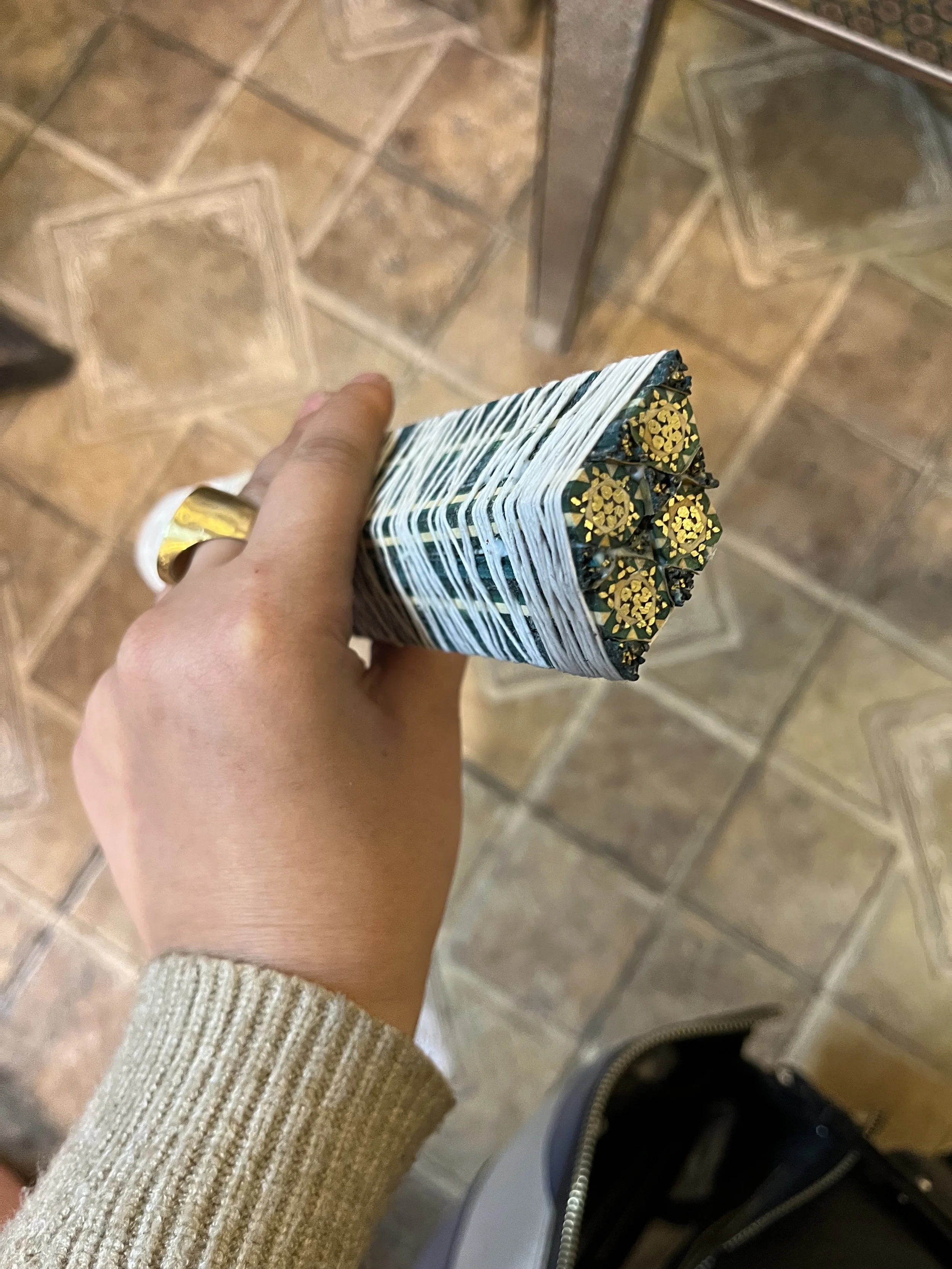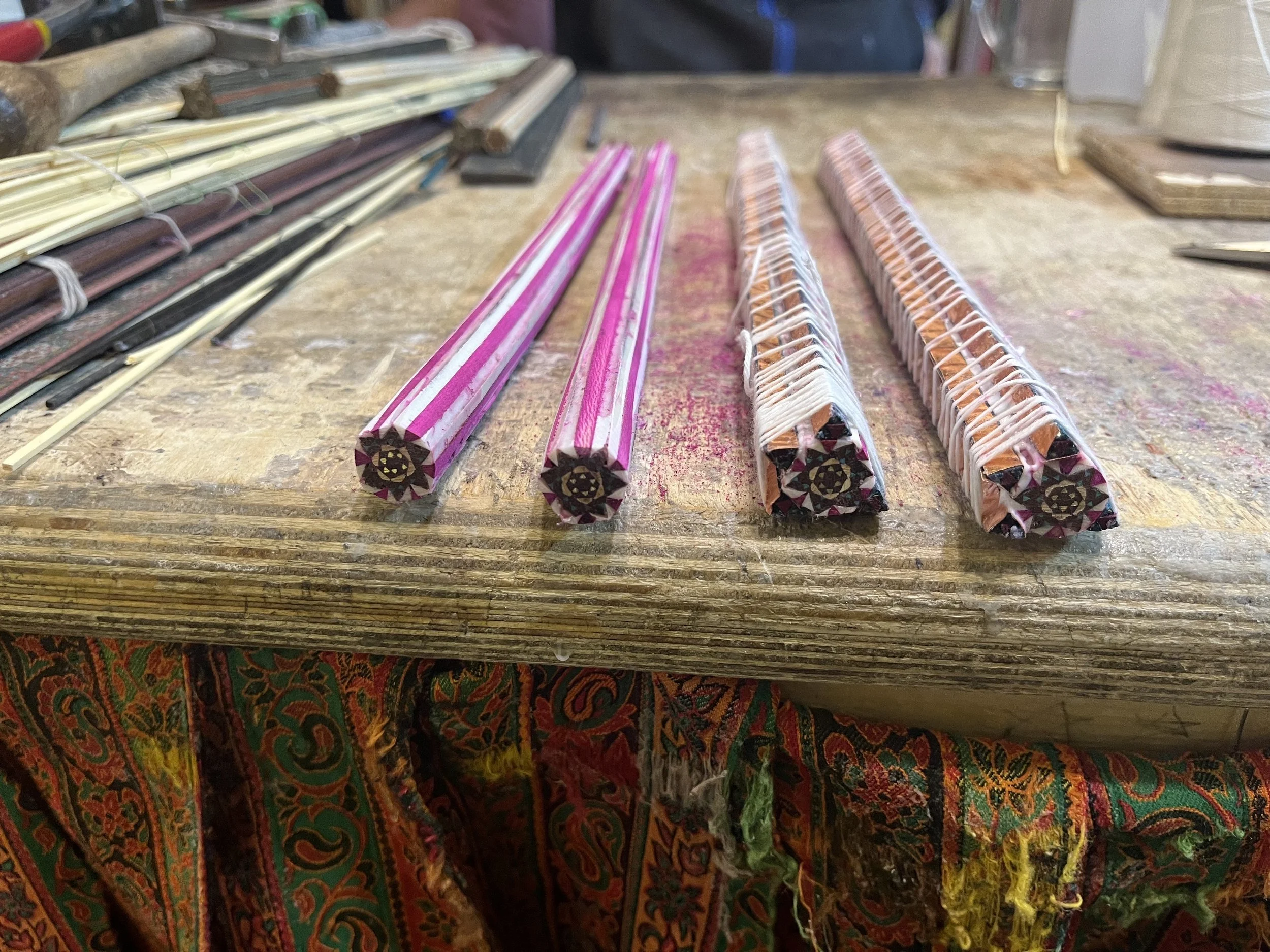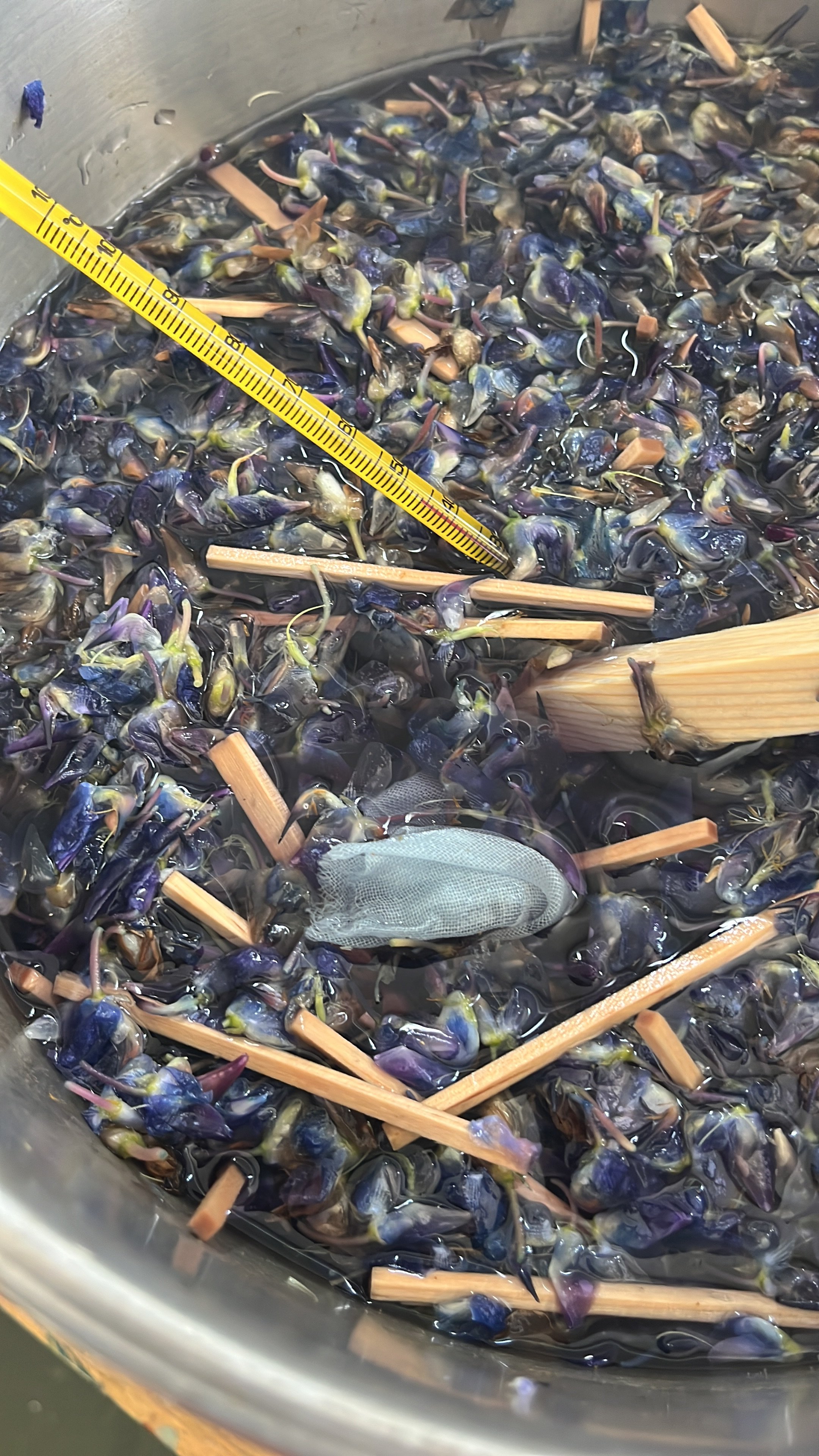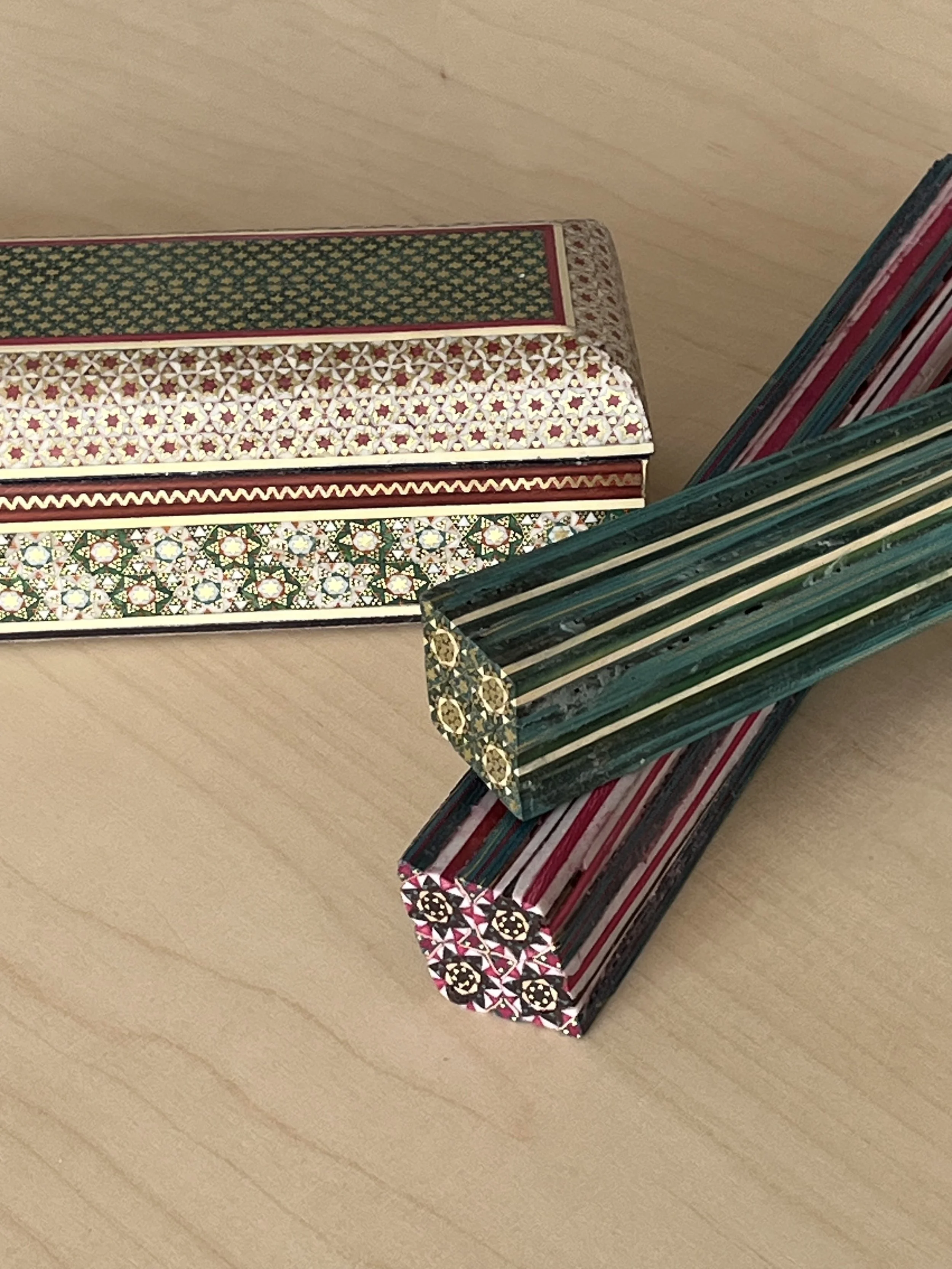
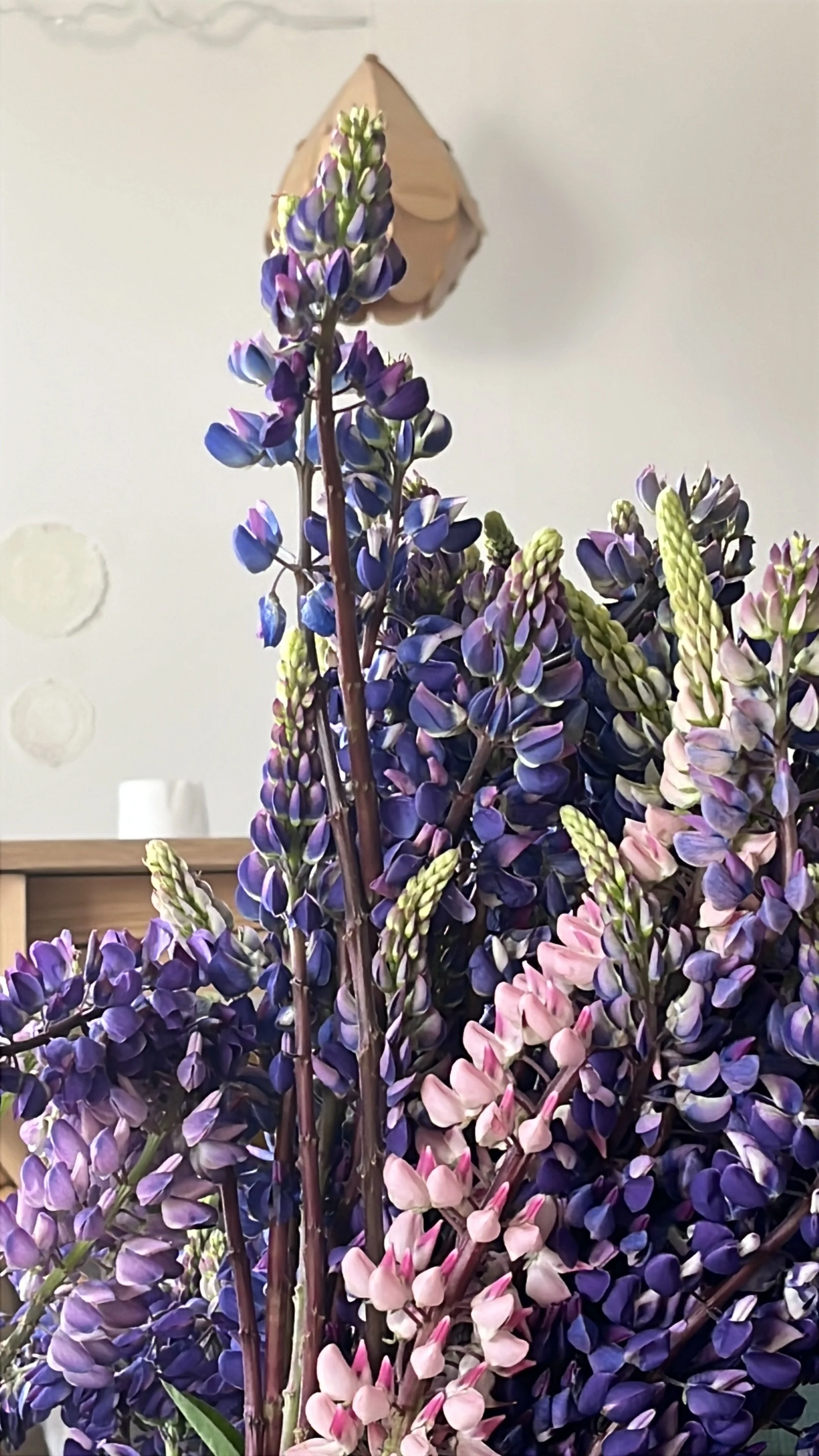
In December 2024, I traveled to Shiraz, Iran, for a six-week apprenticeship in Khatam making — a traditional Iranian wood inlay technique that uses wood, bone, and metal to form miniature geometric patterns. This craft holds deep personal significance: my grandfather was a master of Khatam, and though he passed before I could learn from him, I was able to connect with descendants of his peers. There, I immersed myself in every stage of the process — from material selection, coloring, and gluing to pattern design and its symbolic and cultural meanings — and began to think about how to reinterpret the craft in my own practice.
Khatam is unique in how it unites different materials — wood, brass, bone, ivory — into patterns built from repeated triangles, much like pointillism in painting or woven textile structures. It parallels my experience in weaving, woodworking, and dyeing, both in its technical complexity and in the narrative embedded within its structure.
work I made during the apprenticeship /residancy
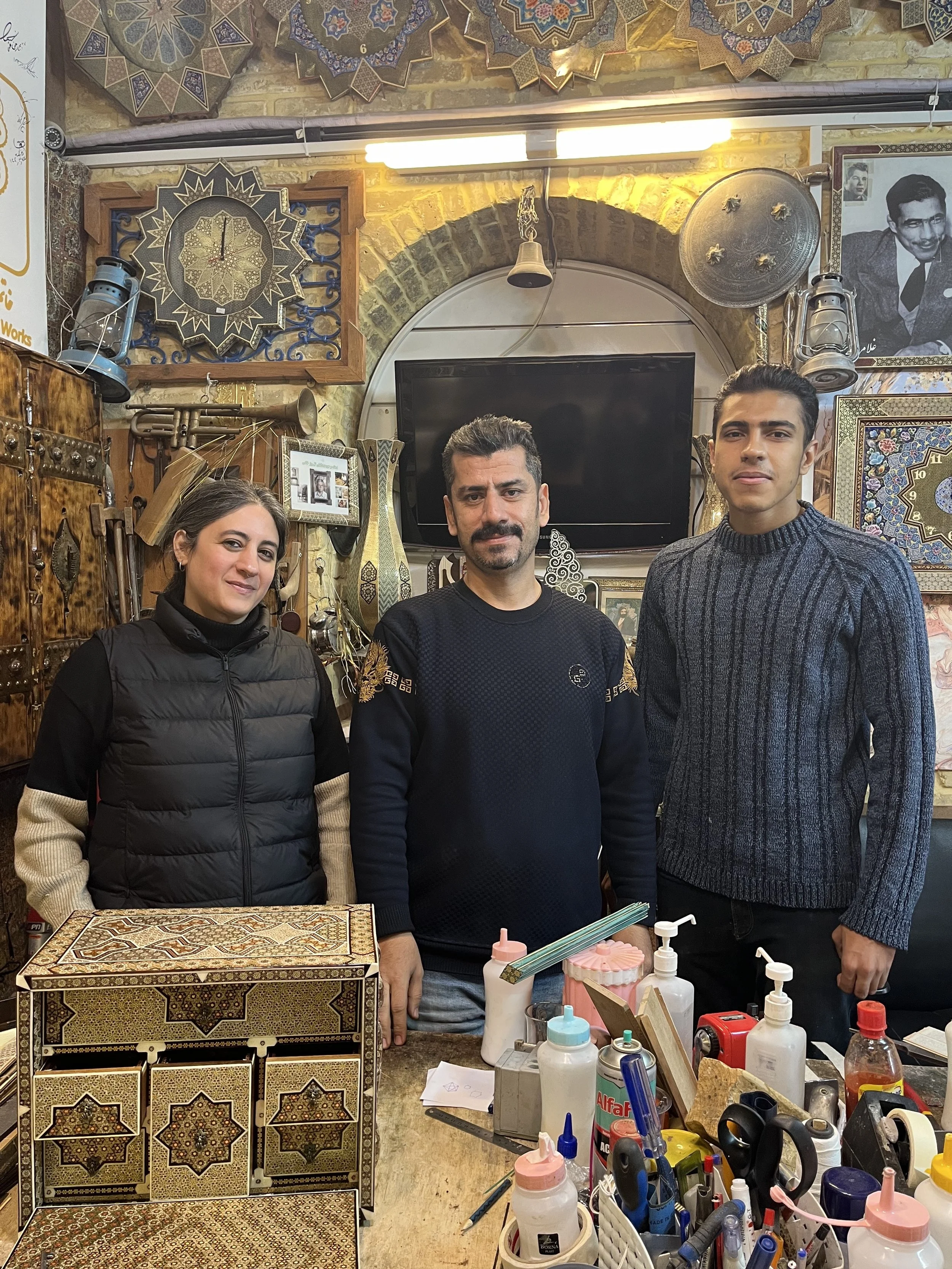
At the atelier with Reza Zare and Milad, Saraye moshir
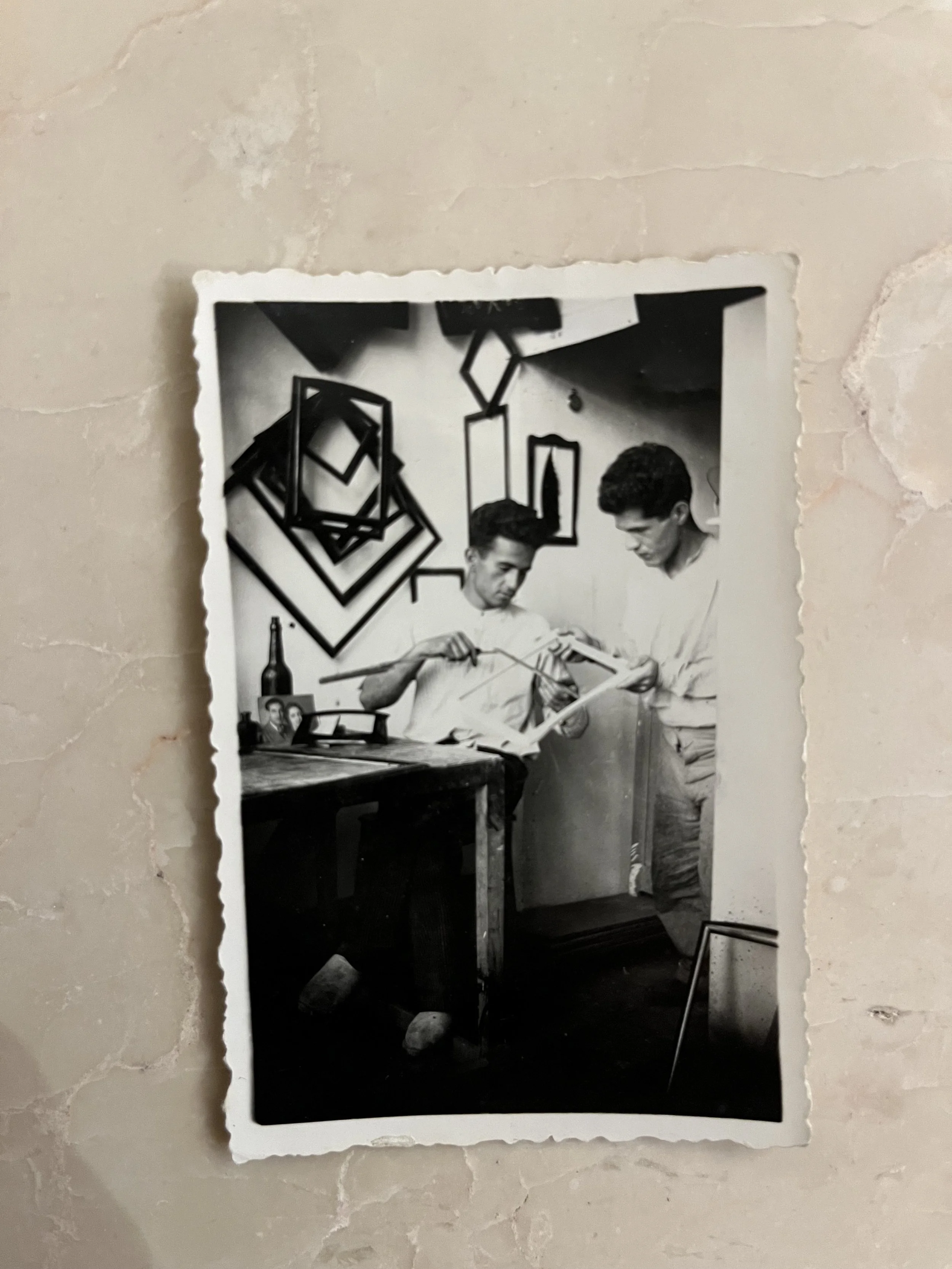
My grandfather on the left , at his atelier.
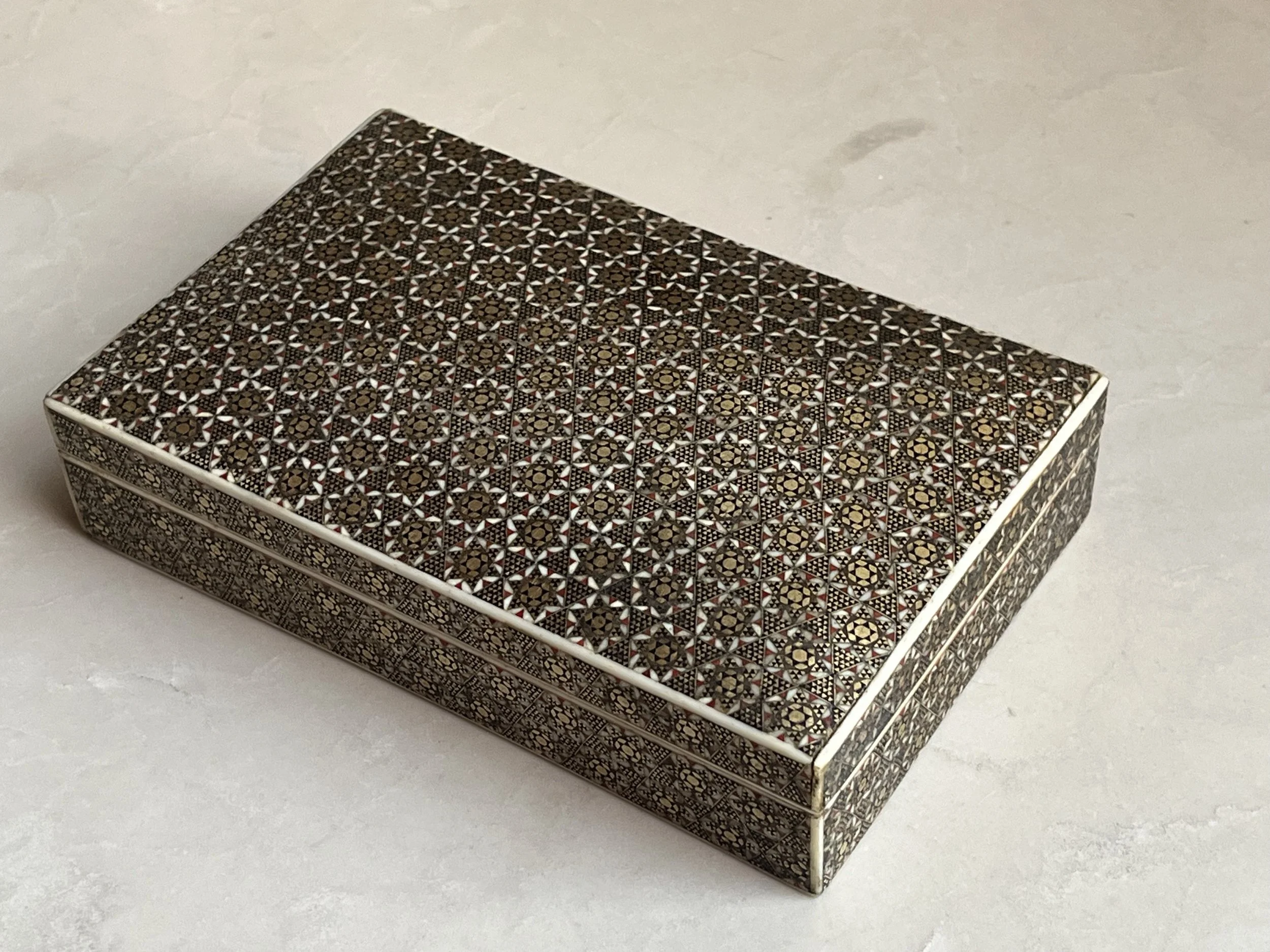
An example of AliPasha kalhor’s (my grandfather) work. Materials: wood, Brass. Ivory
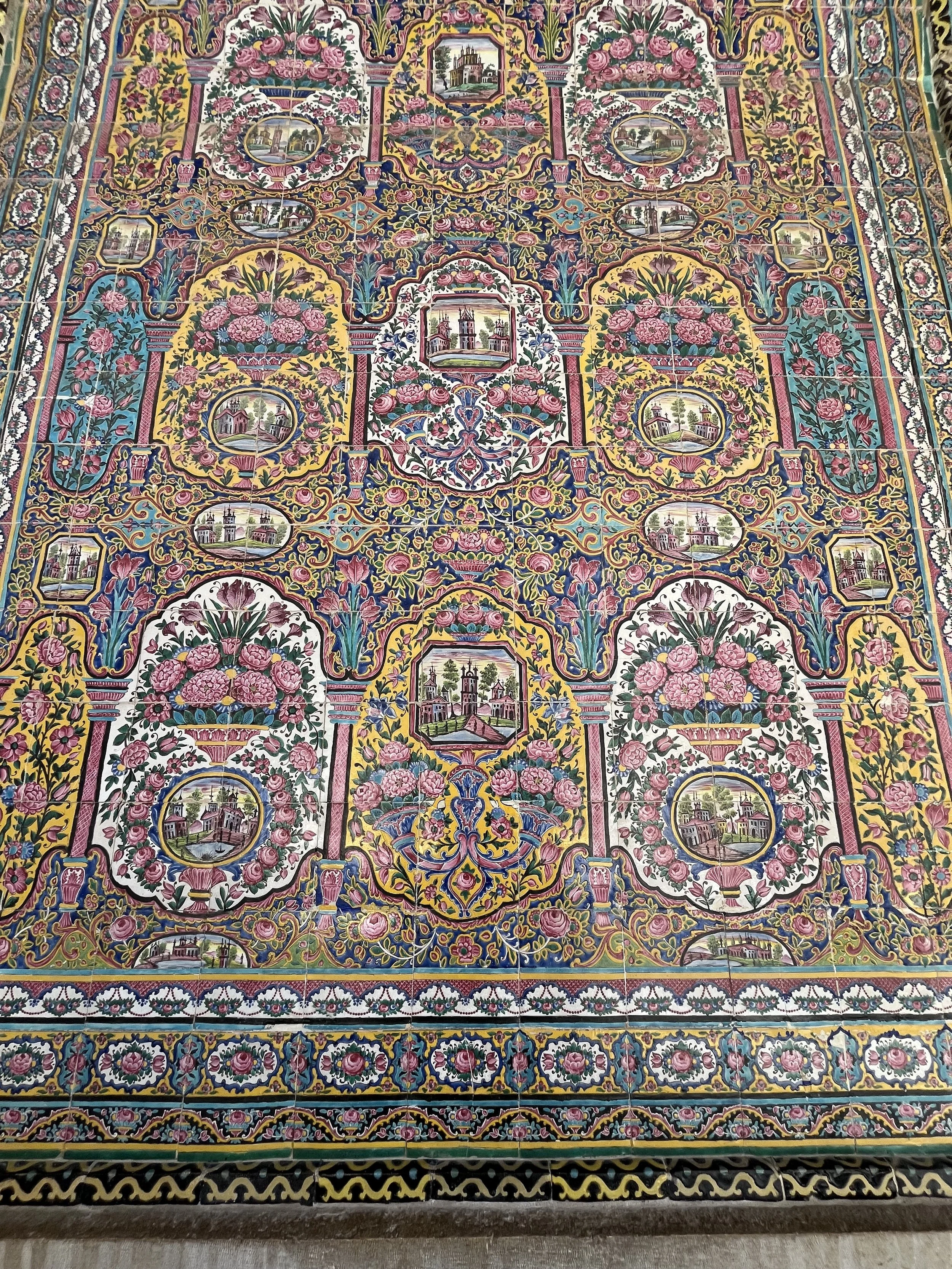
Glimpses of beautiful Shiraz,
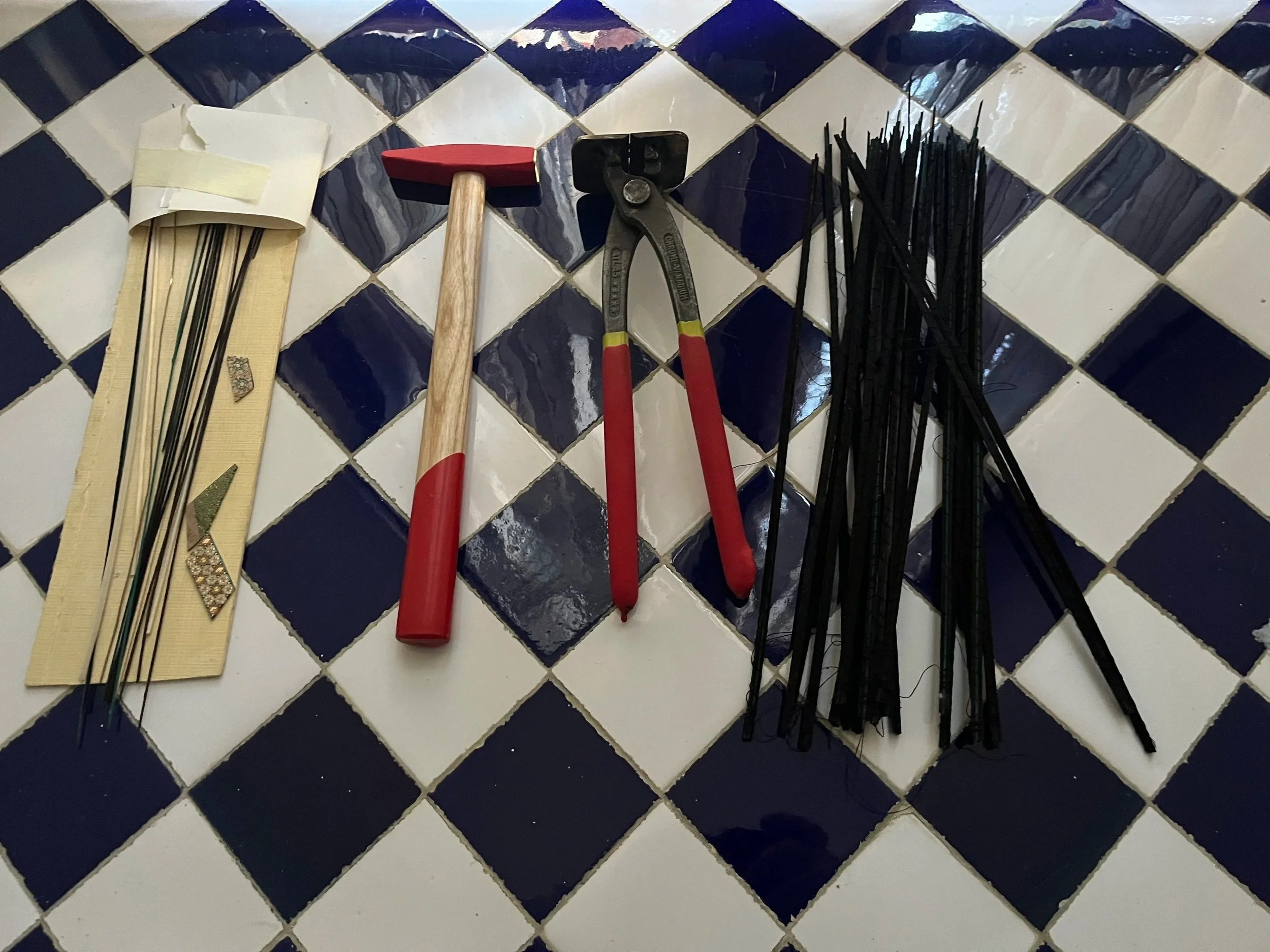
making new works in Helsinki, Kulmapala atelier